
Welcome to
Ms. Laura Lynne’s Art Teaching Portfolio
Teaching Statement
Some of the best teaching advice I’ve received came from Dustin Thacker, Arts and Maker Specialist at the DuPage Children’s Museum. He said to create a community of learners and to try to learn more from them than they do from you. Teaching is like collaborating or co-learning. Ask many questions of the students. Take yourself out of the adult power structure in order to make teaching and learning more successful.
Unfortunately, art education is not valued and often step-by-step crafts are taught in lieu of fine art. I feel this is missed opportunity. Just like music and any other school subjects, art has its own vocabulary, its own language. Art projects can be used to complement academic education creating a better or deeper understanding of a topic. For example, the study of color theory merges into science when children learn about how light works. I feel strongly that teaching children how to see via the study of art can help them in many careers outside of the art world that require attention to detail or creativity. Adding open-ended art assignments teaches not only creativity, but executive function. Learning these skills help children to grow socially, emotionally and creatively. This is my passion and mission in life.

Learning about art history shows where art fits in the past and historical events or time frames. Some examples of projects might include creating an artifact from a lost civilization, studying Egyptian art and culture, and creating a poster advertising a historical event. Students can use their strong foundation in the elements and principles of art when applying it to photography, website design, graphic design and videography projects. In all grade levels, art can be combined with any subject from creating tessellations to drawing perspective to studying the physics of light or flight.
In any class I teach, I aim to provide a variety of resources to enhance the student’s learning. For example, in the Color Theory classes, I showed the students a prism to demonstrate that white light is made up of all the colors. We even turned off the lights for 2 seconds in Color Theory class to learn that black is the absence of light and not considered a color at all. I used posters like color wheels and artworks as examples. To demonstrate drawing, I’ve used a dry erase board, a smart board or plain paper. Other resources include art examples, books, videos (found online and ones I create using Adobe Premiere Pro), and reference photos of animals and plants.
By the end of their art education, students will have learned new skills, and better observing/drawing habits that will help them in any career. Studying art has even shown to improve college test scores. Students will learn how a particular art style or artist fits in historically or relates to important historical events. They will have a better understanding of the elements of art and principles of design, along with color theory, in order to be able to communicate visually.
Teaching Examples & Photos

Here is an example of a color scheme project a teen in my Color Theory Art Camp. Students wanting to go into careers in art, interior design, fashion design and more need to learn color theory. This student’s art shows complementary, rectangular, monochromatic, split complementary, analogous, and triadic color schemes.

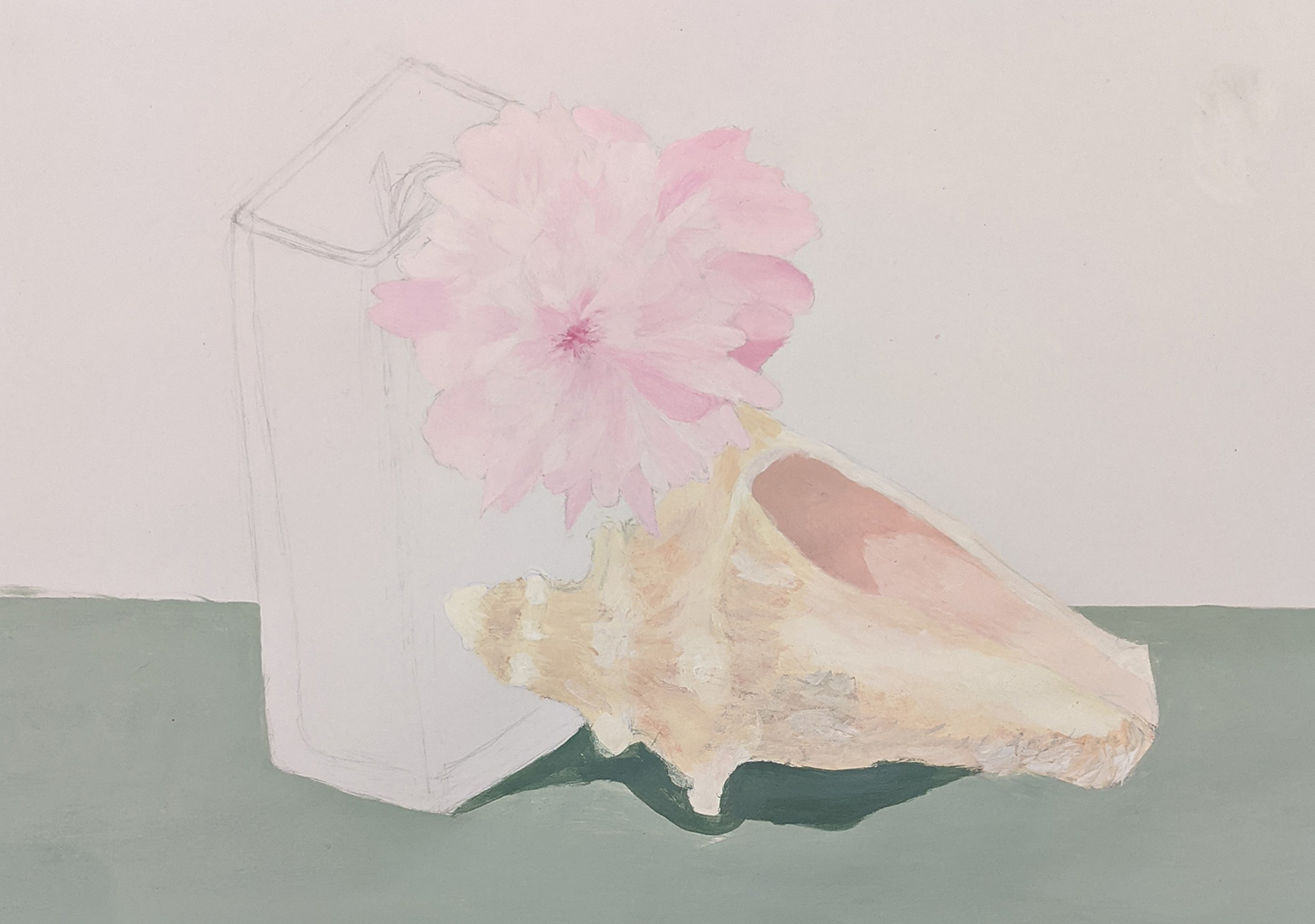
Color mixing was a favorite activity for the teens in the Color Theory Summer Camp students. This student took a long time to study and mix the colors of this shell and peony flower.

In this project students learned about how complementary colors interact with each other with this paper cutting exercise. We learned that they intensify each other.
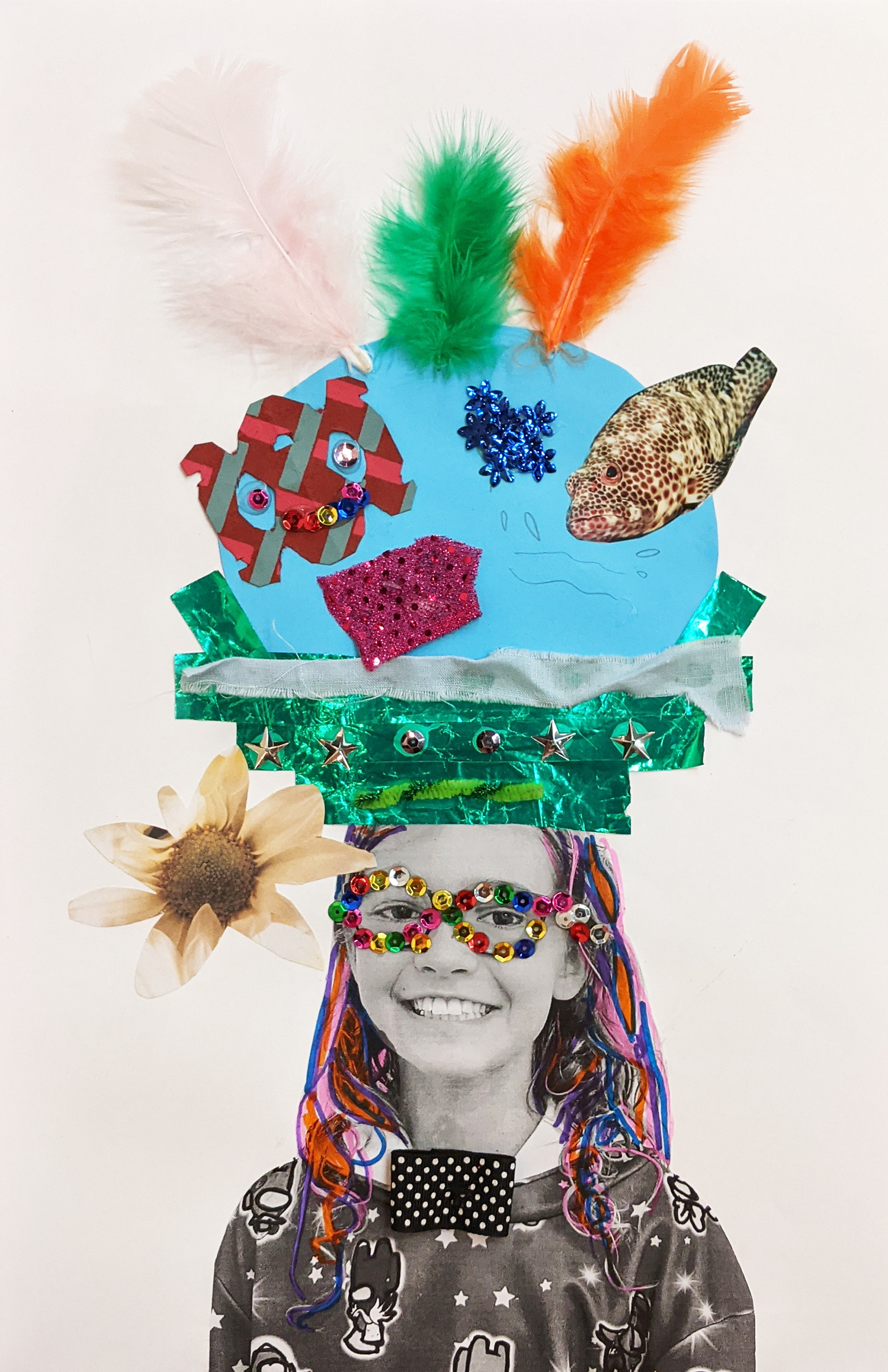
Per the Harvard Business Review, creativity is in demand in the workplace. Students in the Creative Collage class were given a photo of themselves and were asked to design a hat. This student really used her creativity by adding color to the hair and some fun mixed media accessories. Artists learn that creating art means constant decision-making. Creating an artwork from their imagination as opposed to following step-by-step instructions builds confidence. Finishing the project builds executive function.

Observational drawing is one of the most important foundations of art education. It not only helps students to become more confident artists, it also helps students going into other professions in the medical field or policing by helping them to see more details during a surgery, or when looking for evidence. Amy Herman, author of the book Visual Intelligence, works with CIA and FBI agents showing them artworks to train them to see more details and to be more observant. Drawing skills are emphasized in all of my programs.

These wild cats were painted in a Watercolor Wildlife class for teens at my art studio. The students used observational drawing first, then worked on creating a range of values.

Middle schoolers who have never worked in clay did these simple pinch pots.
More Examples
- Here is a video that I made to show younger students how to draw and that it’s okay to make mistakes: Drawing Instruction Video
- For an example of an art lesson, see this Google Slides presentation on value.
Teaching Roles & Responsibilities
Classes:
- 2024 Taught Summer Art Camps for ages 7-16 at Laura Lynne Art Studio
- 2023 to Present – K-8 Art Teacher at Annunciation BVM Catholic School
- Organized an art show with student volunteers
- Created curriculum based on the elements and principles of design using art history examples
- 2021 to Present – Artist-in-Residence for Indian Prairie School District
- Instruct after school workshops and collaborative art projects
- Examples of classes include life drawing flowers and fruit, butterfly shadow puppets, collage
- Lead 8-9 Sessions of Family Art Club each year with a large-scale collaborative artwork based on Midwest wildlife & flora
- Teach zoom summer camps and winter art camp
- Examples of classes include watercolor, mixed media, famous artists (summer 2023), and collage (summer 2023)
- Instruct after school workshops and collaborative art projects
- 2023 Taught Pre-K art workshop at Eola Community Center
- 2022 Led families in a creativity workshop and a collage workshop at The Forge Art Walk in Lemont, IL
- 2022 Taught “My First Art Class” Parent and Child classes at Sing with Emily in Naperville, IL
- Classes included a variety of process art projects, stations, art-based movement, with a shadow puppet play to conclude the class
- 2021 Community Mural Collaboration – Lead Artist for Aurora Unity Mural, Aurora, IL
- Organized and instructed mural painting volunteers of all ages
- Designed large-scale wall mural sign
- 2021 Color Theory Summer Art Camps for age ranges 6-16 at Water Street Studios
- Studied light and pigment, color symbolism, mixing color, color schemes
- 2021 Collage Summer Art Camps for age ranges 6-16 at Water Street Studios
- Covered collage and mixed media techniques
- 2021 Artist-in-Residence at the DuPage Children’s Museum
- Created 6 art instruction videos based on the elements and principles of design with Illinois plants and animals for inspiration
- Co-led Zoom art workshops
- Co-facilitated a virtual gallery space
- 2020 to Present – Co-Formed virtual critique group in order to foster a community of artists and help artists grow
- 2020 Virtual Dragon Collage Workshop sponsored by Aurora Public Art
- 2017 Created a Collaborative Collage Artwork and Workshop at Wesley Preschool with Pre-K students
- 2000 Taught Private and Youth Art Class at Reflections of The Heart Art Gallery, Delafield WI (gallery closed)
- 1998-1999 Taught art classes for adults with mental and physical disabilities at Donna Lexa Community Art Center
If you would like to see more examples or have any questions, please let me know by contacting me at Hello@LauraLynneArt.com or 208-991-2178.